9 Results for "

Lycium barbarum L.

" in MedChemExpress (MCE) Product Catalog:
Products (9)

9 Results for "Lycium barbarum L." in MCE Product Catalog:

1
1 Cited Publications
Art. -Nr.: HY-N2392
CAS. Nr.: 75288-96-9
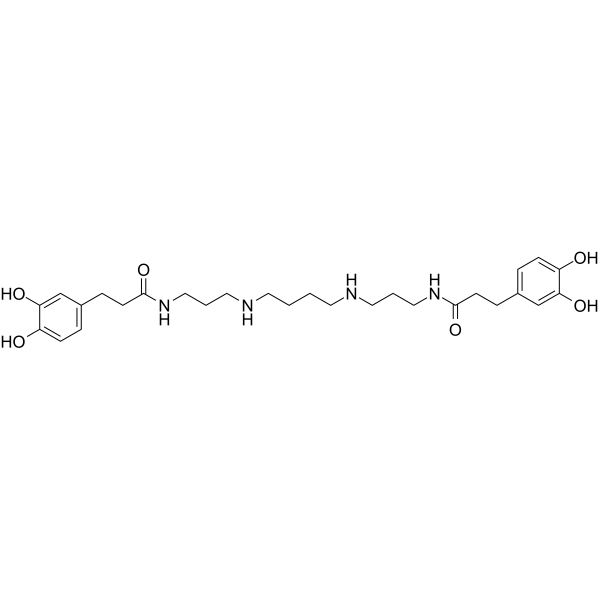
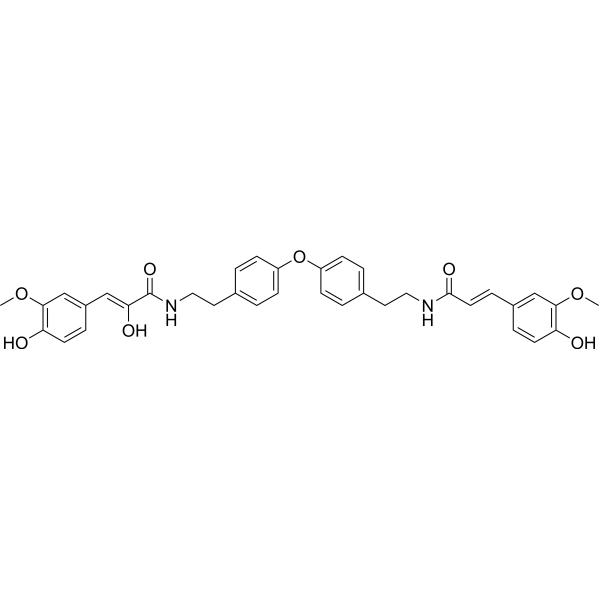
Kukoamine A, a spermine alkaloid, is an orally active and brain-penetrant component found in the root barks of Lycium chinense (L. chinense) Miller. Kukoamine A inhibits purified Crithidia fasciculata trypanothione reductase and soybean lipoxygenase, activates μ-opioid receptor. Kukoamine A can inhibt cancer cell proliferation, migration and invasion, cause G0/G1 phase cell cycle arrest and induce apoptosis. Kukoamine A exerts neuroprotective effect and can induce autophagy . Kukoamine A inhibits LPS (HY-D1056)-induced NO, ROS, PGE2, TNF-α, IL-1β, IL-6 production and COX-2 activity. Kukoamine A reverses palmitic acid-induced insulin resistance, lipid accumulation, and oxidative stress via downregulation of Srebp-1c. Kukoamine A can be used for the research of cancer, infection, inflammation, metabolic and neurological disease, such as glioblastoma and Parkinson's disease .
1
1 Cited Publications
Art. -Nr.: HY-N6958
CAS. Nr.: 562043-82-7
Synonyms: AA-2βG
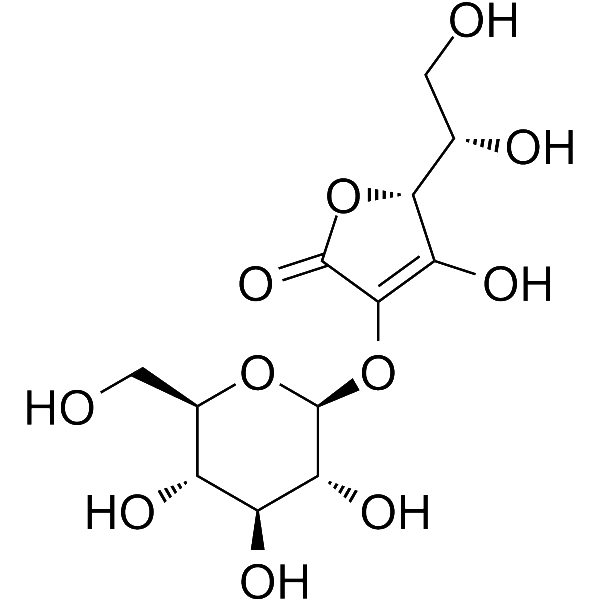
2-O-β-D-Glucopyranosyl-L-ascorbic acid (AA-2βG) is an orally active vitamin C derivative. 2-O-β-D-Glucopyranosyl-L-ascorbic acid exhibits multiple activities including antioxidant, anti-tumor and immunomodulatory effects. 2-O-β-D-Glucopyranosyl-L-ascorbic acid mediates tumor cell apoptosis, induces cell cycle arrest, scavenges free radicals and eliminates oxidative stress. 2-O-β-D-Glucopyranosyl-L-ascorbic acid can be used in studies related to cancer, inflammation and immunity .
1
1 Cited Publications
Art. -Nr.: HY-108170
CAS. Nr.: 121-29-9
Reinheit:  31.27%
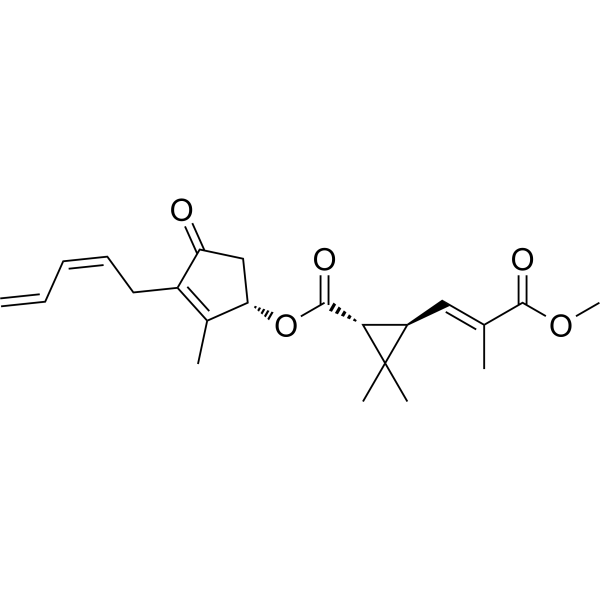
Pyrethrin II is an orally active insecticidal ester of chrysanthemum acid found in Chrysanthemum cinerariifolium and C. coccineum Willd., an active constituent of pyrethrum extract with low mammalian toxicity. Pyrethrin II exhibits antiparasitic activity. Pyrethrin II can be used for the research of allergic contact dermatitis and parasitic infections .
Art. -Nr.: HY-N5117
CAS. Nr.: 55136-76-0
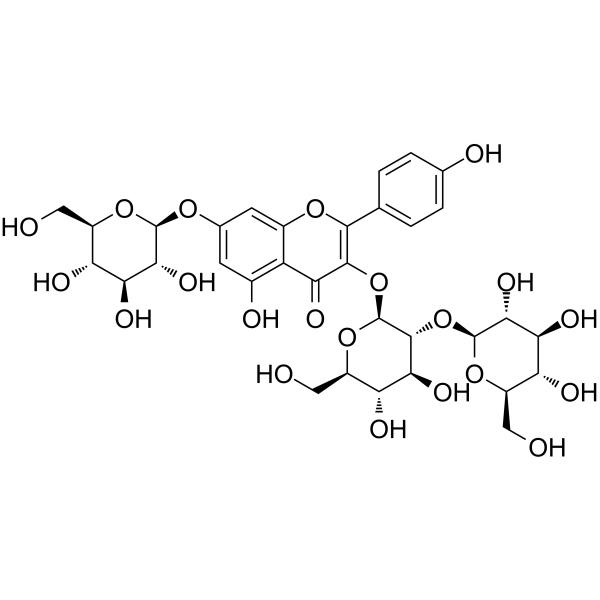
Kaempferol 3-sophoroside-7-glucoside is a bioactive component in roasted Lycium chinense leaves with anti-obesity activity .
Art. -Nr.: HY-N3264
CAS. Nr.: 72500-11-9
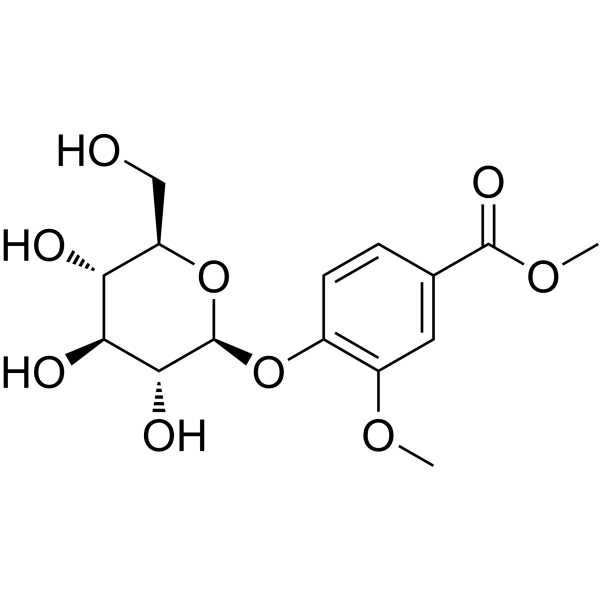
Methyl vanillate glucoside is a secondary metabolite thatcan be isolated from Lycium schweinfurthii .
Art. -Nr.: HY-155704
CAS. Nr.: 1647111-40-7
DPP-IV-IN-5 is isolated from the fruits of Lycium barbarum. DPP-IV-IN-5 exerts moderate agonistic activities for peroxisome proliferator-activated receptor (PPARγ) with EC50 values of 10.09 - 44.26 μM and also presents inhibitory activity on dipeptidyl peptidase-4 (DPPIV) with an IC50 value of 47.13 μM .
Art. -Nr.: HY-N17415
CAS. Nr.: 150394-23-3
Lyciumin C is a monocyclic octapeptide containing a novel C-N linkage between tryptophan N1 and glycine Cα, and can be found in the root bark of Lycium chinense MILL .
Art. -Nr.: HY-N15464
CAS. Nr.: 127842-89-1
Antihepatotoxic agent-1 is a cerebroside present in Lycium chinense Fruits with antihepatotoxic activity. Antihepatotoxic agent-1 exerts a protective effect by blocking the release of alanine aminotransferase and sorbitol dehydrogenase from primary cultured rat hepatocytes intoxicated with carbon tetrachloride. Antihepatotoxic agent-1 can be used in studies related to liver injury .
Art. -Nr.: HY-N17580
CAS. Nr.: 150415-40-0
Lyciumin D acts as an angiotensin-converting enzyme inhibitor and renin inhibitor. Lyciumin D can be used for the research of hypertension .

